Understanding the Deep Linking Icon: A Comprehensive Guide
What is a Deep Linking Icon?
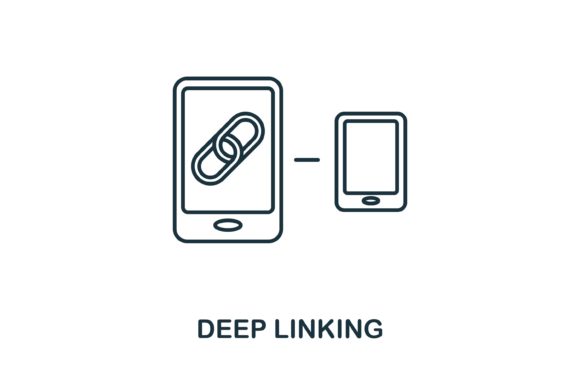
A Deep Linking Icon is a specialized graphic element designed to enhance user navigation and engagement within digital platforms. This icon, often seen in web design, mobile applications, and infographics, serves as a visual cue that links directly to specific content or features within an application or website. Unlike traditional hyperlinks, deep linking icons provide a more direct and seamless experience, allowing users to access specific pages or actions without navigating through multiple steps.
The Distinctive Features of Deep Linking Icons
Deep Linking Icons stand out due to their versatility and ease of use. These icons are typically part of a broader set of vector graphics, which means they can be easily resized and customized without losing quality. When you purchase a Deep Linking Icon, you usually get a package that includes:
- EPS file - Ideal for professional printing and high-resolution displays.
- JPG file - Suitable for web and general use where transparency is not required.
- AI file - Perfect for editing in Adobe Illustrator, offering maximum flexibility.
- SVG file - Scalable Vector Graphics, ideal for web and mobile applications, providing crisp visuals at any resolution.
Comparing Deep Linking Icons with Other Navigational Tools
When considering the use of Deep Linking Icons, it's important to understand how they compare with other navigational tools. Traditional hyperlinks, for instance, are straightforward but can sometimes lead to a less intuitive user experience, especially in complex applications. Buttons, while visually prominent, may not always offer the same level of directness and can clutter the interface if overused.
Deep Linking Icons, on the other hand, strike a balance by being both visually appealing and functionally efficient. They are particularly useful in scenarios where quick, direct access to specific content is crucial, such as in e-commerce apps, educational platforms, or interactive infographics.
Strengths and Tradeoffs of Using Deep Linking Icons
The primary strength of Deep Linking Icons lies in their ability to streamline user interaction. They reduce the number of taps or clicks needed to reach a desired page or feature, thereby enhancing user satisfaction and potentially increasing engagement. Additionally, these icons can be designed to align with the overall aesthetic of your platform, making them a cohesive part of the user interface.
However, there are also tradeoffs to consider. For one, the effectiveness of Deep Linking Icons depends on the user's familiarity with the concept. If users are not accustomed to seeing and using these icons, they might overlook them, leading to missed opportunities for engagement. Furthermore, the initial setup and integration of deep linking can require some technical expertise, which may be a barrier for smaller teams or those with limited resources.
Best-Fit Situations for Deep Linking Icons
Deep Linking Icons are particularly well-suited for applications and websites where quick, direct access to specific content is essential. For example, in e-commerce, a deep linking icon can take users directly to a product page, bypassing the need to navigate through multiple categories. In educational platforms, these icons can link to specific lessons or resources, making the learning process more efficient.
Similarly, in the context of infographics, Deep Linking Icons can be used to provide additional information or to link to related content, enhancing the depth and interactivity of the infographic. This is especially useful in data-rich environments where users may want to explore specific details or related topics.
Limitations and Decision Factors
While Deep Linking Icons offer numerous benefits, they are not a one-size-fits-all solution. The decision to use them should be based on several factors, including the target audience, the complexity of the platform, and the specific goals of the project. For instance, if your audience is not tech-savvy, simpler, more familiar navigation methods might be more effective.
Additionally, the implementation of deep linking requires careful planning and testing to ensure that it enhances, rather than complicates, the user experience. It’s important to conduct user testing and gather feedback to refine the placement and design of these icons.
Conclusion: When to Choose Deep Linking Icons
In summary, Deep Linking Icons are a powerful tool for enhancing user navigation and engagement. They are particularly beneficial in scenarios where quick, direct access to specific content is critical, such as in e-commerce, educational platforms, and interactive infographics. However, their effectiveness depends on the user's familiarity and the technical implementation. By carefully considering these factors, you can determine whether Deep Linking Icons are the right choice for your project.
Ultimately, the key is to balance functionality with user experience, ensuring that the use of Deep Linking Icons adds value and does not overwhelm or confuse your audience. With the right approach, Deep Linking Icons can significantly enhance the usability and appeal of your digital platform.